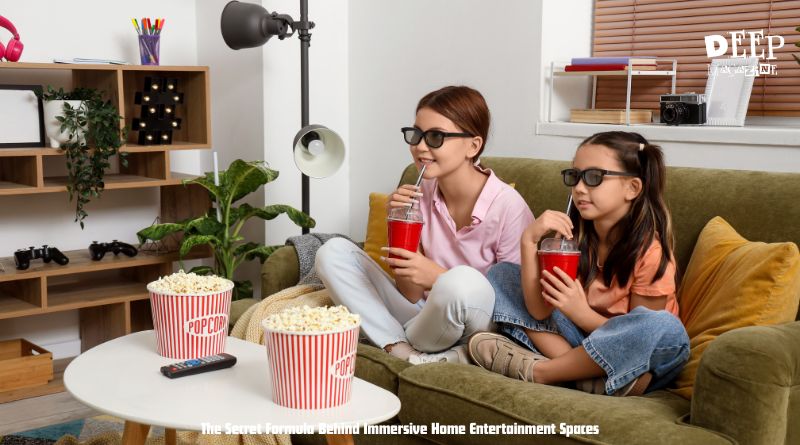
The best immersive entertainment rooms do not feel like a pile of expensive gadgets. They feel like a place where the outside world fades, where sound has weight, where light behaves on purpose, and where the room itself seems to cooperate with the story on screen. That “secret formula” is not a single product or trend; it is a set of design choices that work together to create a consistent, repeatable feeling. In this guide, you will learn how to build that feeling step by step, whether you are starting from an empty room or upgrading what you already have, and if you want to see how a dedicated studio approaches immersive spaces, take a look at the dreamvisioninteriors.com/ website.
Start With a Story, Not a Shopping List
Immersion begins long before you pick a screen size or speakers, because the room has to serve a purpose beyond “watch stuff.” Decide what you want the space to feel like when it is working at its best, then make every technical decision support that outcome.
Define the room’s “main event”
Some rooms are built around cinematic impact, where deep bass and a huge image are the headline. Others are built for social energy, where friends can talk, snack, and still follow what is happening. A growing number are built for interactive play, where fast response, visibility from multiple seats, and flexible lighting matter more than pure movie theater vibes. When you choose the “main event,” you reduce expensive mistakes, because you stop buying features that do not improve the experience you actually want.
Choose your non-negotiables
Every immersive space has tradeoffs. You might value crystal-clear dialogue over chest-thumping bass, or you might care more about a seamless, tidy look than endless upgrade flexibility. Pick two or three non-negotiables that you will protect, and let everything else be adjustable. This keeps the project grounded, and it makes your budget work harder.
The Visual Anchor That Makes Everything Feel Bigger
A room can have excellent sound and beautiful finishes, but if the visuals do not match the promise, the experience falls flat. The trick is not just “bigger screen,” it is perceived scale, contrast, and comfort, all working together.
Screen size and viewing distance should feel effortless
Most people focus on screen size alone, but the viewing distance and the height of the image are what determine comfort. Too close and it becomes tiring, too far and it loses impact. A reliable approach is to plan seating first, then choose a screen size that fills your field of view without forcing head movement. When you get this right, the room feels naturally cinematic rather than aggressively oversized.
Projection vs large display is a lighting decision in disguise
If you want a truly massive image, projection is often the path, but it is also the most sensitive to ambient light. A large display can stay punchy in brighter conditions, but it has its own limits in size and reflective glare. The best choice is the one that matches how you will use the room. If the room is mostly nighttime viewing, projection becomes easier. If you expect daytime hangouts, sports, and casual use, brightness control becomes the deciding factor.
Reduce visual “noise” so the image feels more dramatic
Immersion improves when the screen is the star and everything around it is quiet. That does not mean the room must be dark and plain, but it does mean you should avoid shiny surfaces facing the screen and avoid busy patterns that reflect light. Matte finishes, controlled contrast, and clean sightlines make the image feel richer without spending an extra dollar on the display itself.
Sound That Wraps Around You Without Getting Loud
People often equate immersive audio with volume, but the better goal is presence. Great sound feels close and dimensional, and it stays clear even at moderate levels.
Clarity beats raw power
Dialogue clarity is the single biggest quality marker for most viewers. If voices sound muffled or thin, the room never feels premium, no matter how much bass you add. Clear voices come from smart speaker placement, the right balance between channels, and a room that does not smear sound with excessive echo. When clarity is right, everything else, from music to effects, feels more “real” at any volume.
Room acoustics are the hidden upgrade
Hard surfaces bounce sound, creating harshness and fatigue. Soft materials absorb sound, improving comfort and detail. You do not need to cover every surface, but you do need to prevent the room from turning into a reflective box. Rugs, upholstered furniture, curtains, and thoughtfully placed acoustic treatments can make the audio feel instantly more expensive. If you want to go a level deeper, sound isolation helps keep the experience contained, which is especially valuable when others are asleep or working nearby.
Surround feels immersive when it feels consistent
The “wraparound” effect is not just about adding more speakers; it is about making sure each seat receives a coherent sound field. If one seat gets a strong surround while another seat gets a weak surround, the room feels uneven. Plan speaker positioning around where people actually sit, not around where the walls happen to be convenient.
Lighting That Disappears When the Show Starts
Lighting is one of the most overlooked immersion tools, because people assume it is either on or off. In reality, great lighting is layered, controllable, and designed to guide attention.
Layer light for mood, movement, and function
A truly usable room needs different lighting behaviors for different moments. You want gentle path lighting so people can move safely without washing out the screen. You want dimmable ambient light for casual hangouts. You may want task lighting in snack zones or seating areas that can be targeted without creating glare. When lighting is layered, you can shift the room’s personality in seconds.
Make light sources indirect whenever possible
Visible bulbs and harsh hotspots pull attention away from the screen. Indirect lighting, hidden fixtures, and controlled beams keep the room calm. The result is not just “prettier,” it is more immersive, because your eyes are not constantly adjusting to competing bright points.
Seating and Layout That Make Every Seat Feel Like the Best Seat
Even the most advanced setup will disappoint if the room forces awkward viewing angles, cramped movement, or constant seat shuffling. Layout is what turns technical quality into a relaxed, social experience.
Put comfort and sightlines ahead of symmetry
It is tempting to center everything perfectly, but real rooms have doors, walkways, and multi-use needs. Focus on a primary viewing zone where sightlines are clean, and the screen height feels natural. Then ensure that secondary seats still get a satisfying experience. A small shift in seating position can dramatically improve comfort, and it costs nothing compared to upgrading equipment.
Build “social edges” so the room supports more than watching
The best entertainment spaces support the moments around the movie: chatting, grabbing snacks, pausing for a game, or hosting guests who are not fully locked into the screen. A bar-height counter, a small lounge corner, or flexible ottomans can turn the room from a single-purpose theater into a space people actually use weekly.
One-Touch Control That Keeps the Magic Intact
Nothing breaks immersion like juggling remotes, hunting for inputs, or fiddling with settings while everyone waits. Convenience is part of the formula, not an afterthought.
Create simple scenes instead of complex options
Instead of giving people endless controls, give them a few “modes” that work every time: showtime, gaming, sports, and cleanup. Each mode should adjust lighting, sound profile, and video input automatically. When the room responds instantly, it feels effortless and premium.
Plan cables, ventilation, and access early
Messy cables and overheated equipment are not just technical problems; they change the vibe of the room. Keep equipment organized, make sure it can breathe, and ensure you can access it without tearing the room apart. A clean, stable setup keeps the experience consistent, which is the real goal.
Budgeting That Protects the Feeling
You can spend a lot and still miss the mark if the budget goes to flashy features instead of the foundations of immersion. The smartest budgets prioritize what people feel first, then upgrade the “wow” layers later.
Spend first on the room, then on the gear
If you are choosing between better equipment and better acoustics, lighting control, and layout, the room usually wins. A well-designed room makes mid-tier gear feel impressive, while a poorly designed room can make high-end gear feel underwhelming. Treat the room itself as the first piece of equipment.
Upgrade paths should be planned, not improvised
It is fine to start with a simpler setup, but leave room to grow. Plan wiring routes, mounting options, and space for future components. That way, improvements do not force you to redo finishes or open walls, and the room can evolve without losing its polished feel.
The Secret Formula in One Sentence
A truly immersive home entertainment space is not defined by any single feature, but by how visuals, sound, lighting, layout, and ease of use reinforce the same emotional experience every time you press play.
If you want a final sanity check before you commit, ask yourself this: Does every design choice help the room disappear and the moment take over? When the answer is yes, you have the formula.