A small extra home can be one of the smartest ways to add flexibility to your life. It can become a quiet place to work, a comfortable spot for visiting family, or a long-term rental that helps offset costs. The catch is that compact spaces amplify every decision. A door that swings the wrong way, a window that lands in the wrong spot, or lighting that feels harsh can make the entire place feel tighter than it needs to. The good news is that when you plan the build like a sequence of clear steps, you get to enjoy the fun part, the design, without the usual stress spiral. If you want an example of how that process can be supported by experienced pros, you can visit Remodel Works Bath & Kitchen Design of San Diego.
Before you think about finishes or furniture, it helps to understand what the space must do for you day to day. A short-term guest suite needs a different flow than a full-time rental. A work-focused layout wants sound control and a place for video calls. A multigenerational setup needs privacy and easy access. Getting honest about the lifestyle first keeps you from paying for features you do not actually use, and it stops you from cutting corners that end up being expensive later.
Now let’s talk about the moment that makes a small space feel surprisingly premium. A compact layout benefits from one intentional focal point, something that feels like a designed experience rather than a leftover room. When that focal point also improves the atmosphere at night, it changes how the whole place is perceived. One standout option is a glowing stone feature, created with architectural stone panels with integrated backlighting.
Start With the Real World, Not the Mood Board
A smooth project starts with constraints, because constraints are what turn ideas into decisions. Once you know the boundaries, you can design inside them confidently.
Define the “non-negotiables” early
The easiest way to protect your budget is to decide what absolutely must be true about the finished space. That can include how many people it sleeps, whether it needs a full kitchen, or whether it must be accessible for someone who prefers fewer stairs. When those core needs are clear, the layout becomes simpler, and the tradeoffs feel intentional rather than forced.
Think like a future tenant or a tired version of you
Small spaces do not forgive clutter. Storage has to be built into the plan, not added as an afterthought. Picture coming home with groceries in one hand and your phone in the other. If the entry has nowhere to drop keys, shoes, and bags, the whole place starts to feel messy fast. Design the first two minutes of arrival, and you will automatically design the rest of the home better.
Approvals Without the Headache Tax
Paperwork is not exciting, but it is where most timelines quietly get wrecked. The goal is not to become an expert in regulations, but to build a plan that moves smoothly through reviews and inspections.
Keep the drawings aligned with the build
When plans are vague, questions come later, and late questions cost money. A well-prepared set of drawings anticipates how the space will actually be built. That means clear dimensions, thoughtful electrical and plumbing layouts, and realistic details for anything custom. The more your plan reads like a buildable instruction set, the fewer surprises you get midstream.
Treat scheduling like part of the design
A small extra home often shares utilities or access routes with the main house. That can create practical constraints during construction, like limited staging space or tricky deliveries. Planning the order of work matters. When the sequence is logical, the project feels calm. When it is chaotic, even good contractors look disorganized.
Make a Small Space Feel Bigger Than It Is
Designing for comfort in a compact footprint is mostly about perception. You are not just placing walls and cabinets; you are shaping sightlines, light, and movement.
Borrow space with sightlines
A room feels larger when your eye can travel. That does not mean everything has to be wide open, but it does mean you should avoid chopping the layout into tiny zones. Consider half walls, glass partitions, or open shelving in places where full-height barriers would block light. Even a single interior window can create a feeling of depth.
Use “quiet” surfaces to amplify light
In compact rooms, busy patterns and heavy contrast can visually shrink the space. Light-toned walls and ceilings help bounce light around, which makes the room feel calmer. If you love bold finishes, concentrate them into one hero moment rather than spreading them everywhere. That approach is both more affordable and more elegant.
Choose built-ins that do not bully the room
Oversized cabinets can dominate a small floor plan. Sleeker storage that runs vertically can actually hold more while looking lighter. The goal is to keep the center of the room breathable, so you can move naturally without the space feeling crowded.
Lighting That Feels Good at Breakfast and at Midnight
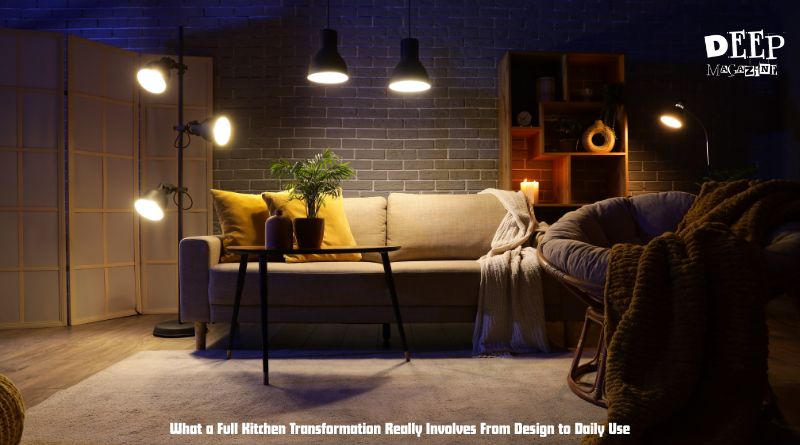
Lighting is where compact homes either shine or feel strangely uncomfortable. You want the space to look clean and bright during the day, and warm and relaxing at night.
Layer the lighting on purpose
Most people think in terms of one ceiling light, then wonder why the room feels flat. The better approach is to layer light sources that do different jobs. Ambient lighting fills the room, task lighting supports cooking or desk work, and accent lighting adds depth. When you can control these layers separately, the room adapts to your life instead of forcing you into one setting.
Plan the controls like you plan the layout
Switch placement matters more than you think. Dimmers matter too. A compact home feels higher-end when you can shift the mood with one simple adjustment. If your glowing feature is part of the plan, make sure it is controllable, not just on or off. You will use it more when it fits your routine.
The Glow Feature Without the Regret
A luminous stone element can be stunning, but only if it is designed like a system. The beauty is not just the stone, it is the consistency of the light and the clean finish around it.
Make maintenance a design requirement
A great-looking feature that is difficult to service becomes a long term annoyance. Drivers, wiring, and access points need a plan. If you cannot reach components without tearing something apart, you are building future frustration into the walls. The goal is to keep the feature elegant and the servicing practical.
Avoid the classic visual mistakes
The most common disappointment is uneven brightness. That can happen when the light source is too close to the stone, the diffusion is not designed correctly, or seams are positioned without considering how light will travel. Testing the illumination before final installation is the difference between “wow” and “why does it look patchy?”
If you want a quick clarity check, here are a few questions worth answering before fabrication begins:
- Where will power and drivers live so the finish remains clean?
- How will you access components if something needs attention later?
- What lighting tests will happen before final installation?
Budget and Timeline That Still Feel Human
Money and time are emotional topics because they shape your daily life while the project is underway. A realistic plan reduces stress more than any design trick.
A compact build often has a few predictable budget drivers. Utility work can add complexity, custom items tend to require more coordination, and upgrades that seem small can stack up quickly. The fix is not to avoid nice things, it is to decide what deserves investment. Spend on comfort, durability, and anything difficult to change later. Be more flexible on items that can be swapped in a weekend down the road.
Timelines work best when you build in breathing room. Reviews and inspections can take longer than hoped. Special order materials can shift unexpectedly. A calm timeline is not a slow timeline; it is a timeline that anticipates reality. When expectations are grounded, you make better decisions, and the project feels far less chaotic.
The Final Walkthrough That Protects Your Future Self
Finishing strong is about verifying the details that shape daily comfort. It is easy to get distracted by the big visual moment and miss the practical things that matter more a month later.
During the walkthrough, pay attention to how the space lives. Open and close doors. Test the lighting scenes at different times of day. Listen for sound transfer if privacy matters. Check ventilation, water pressure, and the feel of the flooring underfoot. A small extra home feels luxurious when it is quiet, comfortable, and easy to maintain.
When all of that is right, the glow up is not just aesthetic. It is functional. You end up with a space that feels welcoming, bright, and intentionally designed, even in a compact footprint. That is the real win: a small home that does not feel small at all.